Securing the 'Last-Mile' of urban mobility

Securing the 'Last-Mile' of urban mobility

Securing the 'Last-Mile' of urban mobility

A civic data initiative dedicated to bike parking transparency. By integrating municipal data, verified incident records, and community-sourced feedback, the platform provides the standardized metrics necessary to secure the critical 'last-mile' of urban transit.

A civic data initiative dedicated to bike parking transparency. By integrating municipal data, verified incident records, and community-sourced feedback, the platform provides the standardized metrics necessary to secure the critical 'last-mile' of urban transit.

A civic data initiative dedicated to bike parking transparency. By integrating municipal data, verified incident records, and community-sourced feedback, the platform provides the standardized metrics necessary to secure the critical 'last-mile' of urban transit.

The Problem

Bike parking remains an overlooked piece of urban mobility
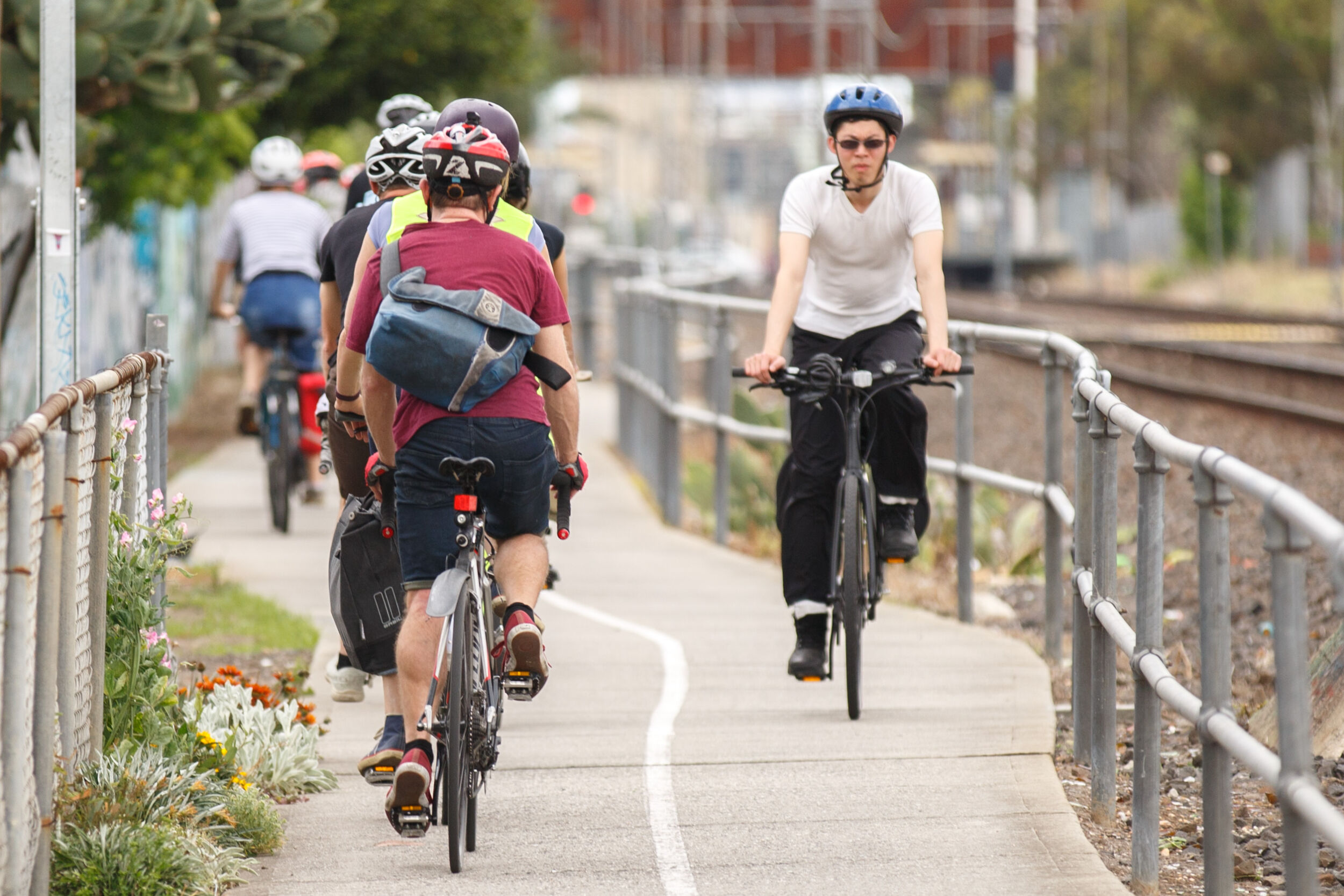
Cities are investing billions in bike lanes, yet one of the most critical parts of the journey—the destination—remains a black hole of information. Currently, riders have to rely on guesswork, parking at the first rack they see without knowing the surrounding conditions or whether better options exist nearby.

This uncertainty creates a "security gap" that discourages commuting and undermines the ROI of our public transit infrastructure.

$0 million

$0 million

invested in Texas mobility infrastructure

Texas cities are currently deploying significant capital to expand bike lanes and regional transit networks.

$0 million

$0 million

invested in Texas mobility infrastructure

Texas cities are currently deploying significant capital to expand bike lanes and regional transit networks.

0%

0%

of bike theft goes unreported to police

Public crime data misses the majority of incidents, creating a massive information vacuum for urban riders.

0%

0%

of bike theft goes unreported to police

Public crime data misses the majority of incidents, creating a massive information vacuum for urban riders.

0% riders

0% riders

forgo riding due to security fear

The lack of transparency regarding secure parking hinders potential commuters from choosing bikes.

0% riders

0% riders

forgo riding due to security fear

The lack of transparency regarding secure parking hinders potential commuters from choosing bikes.

0% visibility

0% visibility

into parking-specific risk data

No unified platform exists to synthesize municipal assets with incident records—leaving riders to guess.

0% visibility

0% visibility

into parking-specific risk data

No unified platform exists to synthesize municipal assets with incident records—leaving riders to guess.

The Solution

Introducing the Bike Parking Index (BPI) framework

The BPI is a weighted scoring model designed to quantify the security of urban bike parking. By synthesizing physical audits with historical and real-time data, the index provides a standardized metric for safety transparency.

BPI Algorithm = (45% × S) + (35% × T) + (20% × R)

  • 45% Site Conditions (S): Evaluation of physical infrastructure.

  • 35% Theft Risk (T): Analysis of municipal crime data.

  • 20% Rider Intelligence (R): Real-time community feedback.

How it works

From raw data to actionable insights

01

Data ingestion

The BPI framework is designed to pull raw data from municipal infrastructure APIs, police incident records, and real-time community reports.

01

Data ingestion

The BPI framework is designed to pull raw data from municipal infrastructure APIs, police incident records, and real-time community reports.

01

Data ingestion

The system pulls raw data from municipal infrastructure APIs, police incident records, and real-time community reports.

02

Risk analysis

The algorithm weights these inputs through the 45/35/20 model to turn fragmented information into a single, standarized BPI score.

02

Risk analysis

The algorithm weights these inputs through the 45/35/20 model to turn fragmented information into a single, standarized BPI score.

02

Risk analysis

The algorithm weights these inputs through the 45/35/20 model to turn fragmented information into a single, objective safety score.

03

Interactive map user interface


The analyzed scores integrated into a familiar map where each rack is assigned a unique Global Node ID (e.g., HOU-WST-1042). This allows riders to verify locations and enables city planners to track with granular precision.

03

Interactive map user interface

The analyzed scores integrated into a familiar map where each rack is assigned a unique Global Node ID (e.g., HOU-WST-1042). This allows riders to verify locations and enables city planners to track with granular precision.

03

Interactive map user interface

The analyzed scores are integrated into a familiar map interface, allowing riders to find and verify safe parking locations in seconds.

Visual proof-of-concept

The framework in Texas Medical Center area

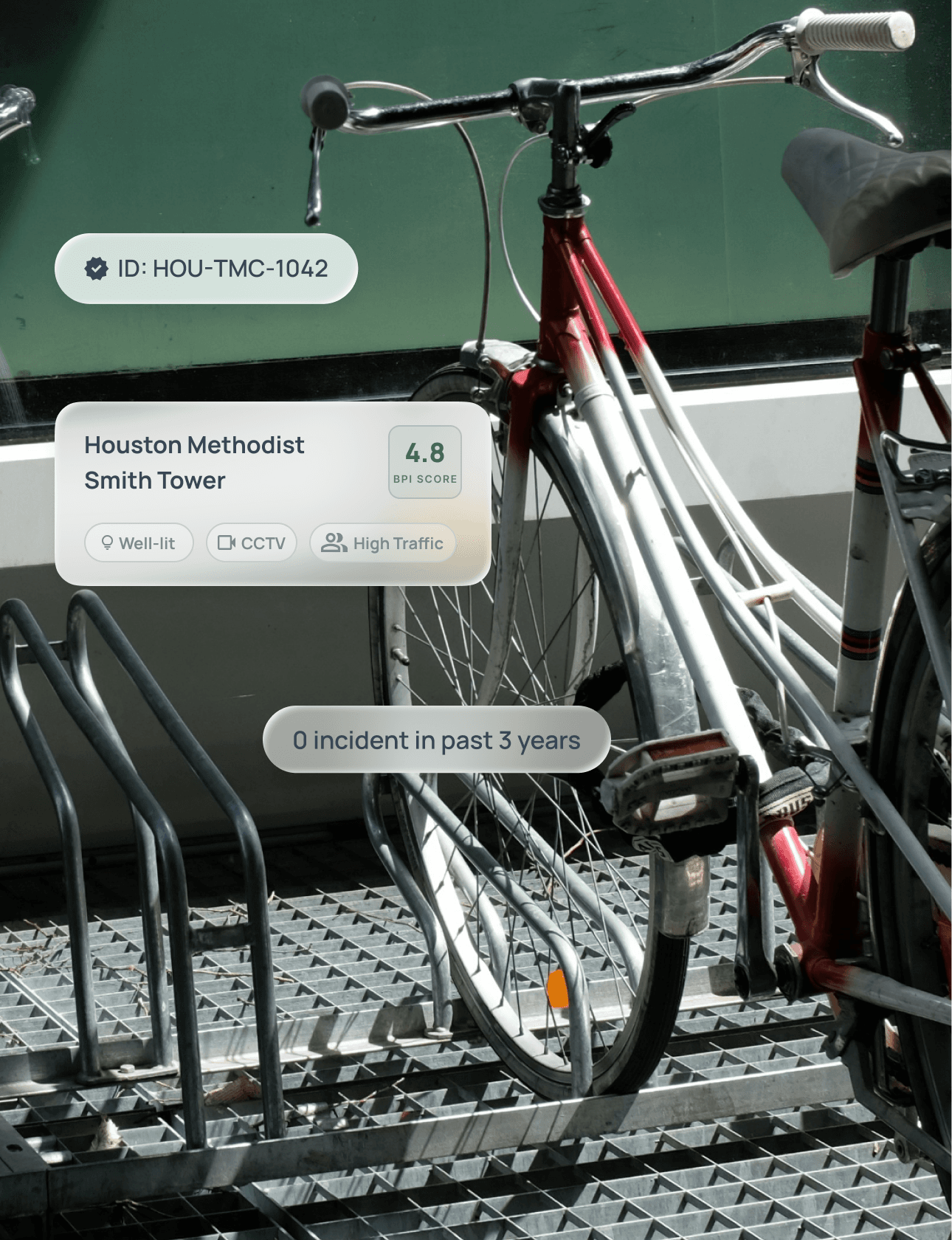
The Texas Medical Center area provides the ideal environment to validate this framework as one of Houston’s densest hubs for bike commuters. By synthesizing spatial mapping with algorithmic data, the system transforms raw urban signals into a reliable navigation resource. This methodology provides the transparency riders need in complex environments and is engineered to scale as a functional blueprint for any metropolitan infrastructure.

Contact

Interested in following the project or collaborating?

The Bike Parking Index (BPI) initiative is actively seeking advice, especially from city agencies, biking advocacy groups, and civic technology communities.

If you are interested in the BPI framework or have any feedback, feel free to reach out to contact@bikeparkingindex.org. This project thrives on institutional feedback and shared expertise.

If you'd like to follow the development of the BPI initiative, you can sign up using the form to receive updates as the project develops.

Join the early supporters and follow the project’s progress

Join the early supporters and follow the project’s progress